The Science of Caffeine Addiction: Safe Limits and How to Break the Habit
Can't function without your morning coffee? It might be a sign of caffeine dependency. Explore how caffeine affects your brain, safe daily limits, and effective ways to manage withdrawal symptoms.
In modern society, caffeine is the most common "psychoactive substance." While many consume it to boost performance at work or school, the underlying physiological mechanisms and the risks of addiction are surprisingly misunderstood. This article provides an in-depth look at how caffeine affects the brain, why "dependency" occurs, and how to maintain a healthy relationship with this powerful stimulant.
1. How Caffeine "Tricks" Your Brain
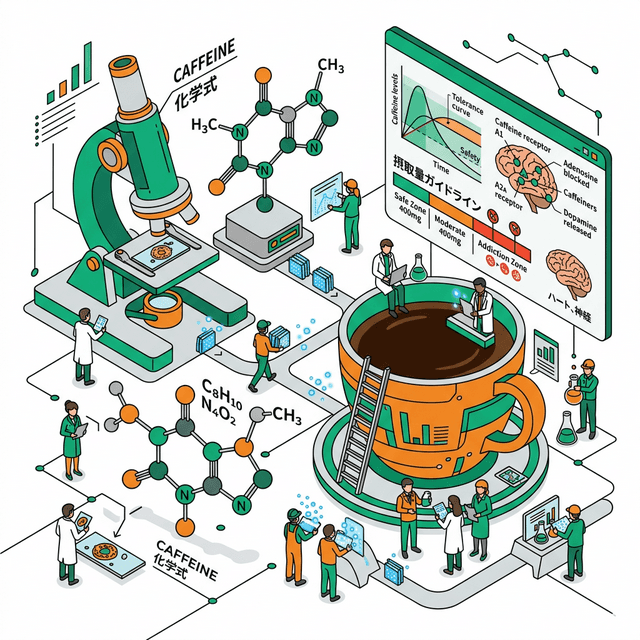
The primary function of caffeine is to block "adenosine receptors" in the brain.
Normally, as we go about our day, a substance called adenosine builds up in the brain. When it binds to its receptors, it triggers signals for "sleepiness" and "fatigue." However, because caffeine has a molecular structure very similar to adenosine, it can hijack those receptors. As a result, your brain doesn't receive the "tired" signal, tricking you into staying awake even when you're physically exhausted.
If you're curious about your current intake, start by visualizing your daily consumption with the tool below.
Caffeine Intake CalculatorTrack your daily caffeine intake and learn your safe consumption limits.2. Understanding Caffeine Addiction and Dependency
When you consistently consume large amounts of caffeine, the brain tries to compensate for the blocked receptors by creating even more adenosine receptors. This is where "tolerance" begins.
- Tolerance: You no longer feel the same alertness from your usual dose, leading you to seek even more.
- Dependency: Without caffeine, the excess adenosine receptors become flooded, leading to severe sleepiness, irritability, and headaches (known as withdrawal symptoms).
Acute caffeine intoxication typically occurs when consuming massive amounts (roughly 1g or more) in a short period, leading to heart palpitations, tremors, anxiety, and insomnia.
3. Safe Consumption Limits for a Healthy Life
Health organizations worldwide (such as the EFSA and Health Canada) generally recommend the following safe intake limits for healthy adults:
| Group | Max Daily Intake | Max Single Dose |
|---|---|---|
| Healthy Adults | 400mg (Approx. 4-5 cups of coffee) | 200mg |
| Pregnant/Nursing Women | 200mg | 200mg |
| Children & Adolescents | Below 3.0mg per kg of body weight | - |
Be cautious with energy drinks, which can contain 150mg to 200mg of caffeine in a single can, easily pushing you to the daily limit with just two servings.
4. How to Manage Caffeine Withdrawal Symptoms
If you're looking to reduce your intake, the golden rule is to "taper off gradually" rather than quitting cold turkey. Stopping abruptly can lead to peak withdrawal symptoms like intense headaches, fatigue, and lack of focus for 1-2 days.
- Taper over 2 weeks: Gradually replace one cup a day with decaf.
- Increase Hydration: Drinking more water aids metabolism and can help alleviate headaches.
- Switch to Herbals: Utilize non-caffeinated options like Rooibos tea to satisfy the routine of drinking something hot.
5. How Caffeine Impacts Your Sleep Quality
Even if you can "fall asleep" after drinking coffee, your brain may not be getting the deep rest it needs. Research consistently shows that caffeine remaining in the bloodstream around bedtime reduces time spent in deep sleep (Non-REM stages 3 and 4).
Here are the key problems this creates:
- Impaired Memory and Learning: Deep sleep is when the brain consolidates and solidifies memories. Reduced sleep quality leads to noticeably worse retention and focus the next day.
- Suppressed Growth Hormone: The bulk of growth hormone secretion (critical for physical repair and recovery) occurs during deep sleep. When this is disrupted, you wake up feeling unrefreshed no matter how long you slept.
- Accumulating "Sleep Debt": Caffeine doesn't eliminate adenosine (the sleepiness molecule); it merely postpones it. Every time you use caffeine to push through tiredness, that sleepiness debt accumulates and must eventually be repaid with deep, restorative sleep.
For "slow metabolizers" (a genetic trait), a cup of coffee drunk in the evening can still be significantly present in the bloodstream the next morning. Commit to a caffeine cut-off 6-8 hours before bedtime to protect your sleep quality, and use the tool below to review your intake timing.
Caffeine Intake CalculatorTrack your daily caffeine intake and learn your safe consumption limits.FAQ: Frequently Asked Questions
Q. I can sleep even after drinking coffee late at night. Am I addicted? A. Caffeine metabolism varies by genetics, but "falling asleep" is different from "quality sleep." Even if you fall asleep, caffeine in your system can block deep, restorative sleep, leading to fatigue the next morning. For some people, even a moderate dose metabolized "slowly" can leave residuals until dawn. Scheduling regular caffeine-free days can help you gauge your true sensitivity.
Q. Is it safe for children to drink soda or green tea? A. Children are more sensitive to caffeine than adults. Occasional small amounts are generally fine, but regular consumption can lead to irritability and sleep deprivation.
Q. Is it okay to consume caffeine for the rest of my life? A. For most, moderate consumption (under 400mg/day) is associated with health benefits, such as reduced risks of Alzheimer's and certain liver diseases. The key is in the "quantity" and "timing."
Conclusion: Mastering the Tool
Caffeine is a brilliant tool when used correctly, but it can become a burden if abused. To stay in control, remember these three steps:
- Keep it under 400mg/day
- Stop intake 6-8 hours before bed.
- Schedule "Caffeine-Free Days" once or twice a week.
Control your intake to ensure you're getting the best out of your caffeine, not the other way around.
Try the Tools from This Article
Experience what you've learned with our free tools.