Sleep Disorder Checklist: Signs That You Need Medical Attention Beyond Just Getting More Sleep
Learn about types of sleep disorders (insomnia, sleep apnea, hypersomnia) and their symptoms. Understand when to see a doctor vs. just sleep more, with a self-check before consultation.
"Tiredness That Doesn't Go Away With Sleep" May Be a Sleep Disorder Sign
"I haven't been sleeping well lately." "Getting up in the morning is agonizing." "I get overwhelmingly sleepy during the day." — Do you dismiss these issues as "I'm just busy" or "I must be tired"?
While some sleep disruption is temporary and resolves with lifestyle adjustments, problems that persist for more than a month may indicate a sleep disorder requiring specialist care.
An estimated 20 million or more Japanese people have some form of sleep disorder, yet most dismiss it as "not serious enough" to seek medical attention.
This article explains the main types of sleep disorders, how to distinguish them from simple sleep deprivation, and the signs that mean you should see a doctor.
Sleep Disorder DiagnosisSelf-check your sleep quality and assess risks for insomnia or apnea.⚠️ This article is for informational purposes only and does not replace professional medical diagnosis or treatment. If you are concerned about symptoms, please consult a qualified healthcare provider.
Main Types of Sleep Disorders and Their Characteristics
1. Insomnia
The most common sleep disorder, with three subtypes:
Sleep-onset insomnia Unable to fall asleep within 30+ minutes regularly. Often caused by anxiety about tomorrow or an overactive mind.
Sleep maintenance insomnia Waking multiple times during the night and being unable to return to sleep. More common in older adults; also caused by alcohol or diuretic medications.
Early morning awakening Waking 2+ hours before intended, unable to return to sleep. A classic symptom of depression.
Diagnostic note: If any of the above occurs 3+ times per week for 1+ months, clinical insomnia may be diagnosed.
2. Sleep Apnea (OSA)
Breathing stopping during sleep (10+ second apneas 5+ times per hour).
Main symptoms:
- Loud snoring
- Morning headaches and dry mouth
- Excessive daytime sleepiness (falling asleep while driving)
- Reduced concentration and memory
- Frequent nighttime urination
Why it's serious: Sleep apnea significantly raises the risk of hypertension, heart disease, and stroke. Some research suggests untreated sleep apnea triples heart disease risk.
3. Hypersomnia / Narcolepsy
Excessive daytime sleepiness despite adequate nighttime sleep. Narcolepsy additionally involves "cataplexy" — sudden muscle weakness triggered by strong emotions.
4. Restless Legs Syndrome (RLS)
Uncomfortable sensations (crawling, tingling, aching) in the legs when resting or lying down, creating an irresistible urge to move them. Can be worsened by pregnancy or iron deficiency.
5. Circadian Rhythm Sleep Disorders
A misalignment of the body clock disrupting sleep timing. "Delayed sleep phase syndrome" — where the person cannot fall asleep until 2–3 AM — is the most common type.
Sleep CalculatorWhat time should I sleep? Calculate your 90-minute sleep cycles to wake up refreshed.How to Tell Simple Sleep Deprivation from a Sleep Disorder
Characteristics of Temporary Sleep Disruption
- Clear identifiable cause (work rush, recent move, etc.)
- Naturally improves when the cause resolves
- Resolves within 1–2 weeks
- Limited impact on daily functioning
Signs to Consider Seeking Medical Advice
Consider consulting a specialist if any of the following persists for 1+ months:
□ Unable to fall asleep for 30+ minutes, 3+ times per week □ Waking 2+ times per night □ Strong daytime sleepiness despite adequate sleep □ Loud snoring or told breathing stops during sleep □ Wake up unrefreshed regardless of sleep duration □ Sleep problems significantly affecting work or daily life □ Restless, uncomfortable legs preventing sleep □ Completely inverted sleep-wake schedule
Why You Shouldn't Ignore Sleep Disorders
Connection to Mental Illness
Insomnia is both a major symptom and cause of depression and anxiety disorders. "Can't sleep → depression → still can't sleep" forms a vicious cycle. An estimated 80–90% of depression patients report insomnia.
Increased Lifestyle Disease Risk
With less than 6 hours of sleep nightly:
- Diabetes risk increases ~1.3x
- Obesity risk increases ~1.7x
- Hypertension risk increases ~1.5x
These effects are explained by sleep deprivation increasing cortisol (stress hormone) and ghrelin (appetite-stimulating hormone) secretion.
Traffic and Workplace Accident Risk
Cognitive performance during sleep deprivation is comparable to being legally intoxicated. Meta-analyses often report that sleep apnea is associated with roughly a 2–3x increase in traffic accident risk versus healthy individuals, with some severe untreated cohorts showing higher risk.
Self-Care to Try Before Seeing a Doctor
Attempt lifestyle changes for 2–4 weeks first. If no improvement, consider specialist consultation.
Sleep environment optimization
- Dark, quiet, cool bedroom (18–20°C / 64–68°F is ideal)
- Avoid blue light 1–2 hours before bed
- Reserve the bed for sleeping only (no phones or laptops in bed)
Lifestyle adjustments
- Wake at the same time every day (don't sleep in too much on weekends)
- Finish exercise by early evening
- Avoid caffeine after 3 PM
- Avoid food and alcohol 2–3 hours before bed
Frequently Asked Questions
Q1. Which medical department should I visit for sleep disorders? A: Start with your general practitioner (internal medicine or family doctor). Sleep clinics, psychiatry, and psychosomatic medicine departments are also appropriate. Depending on symptoms, referrals to neurology or otolaryngology may follow.
Q2. How do I address concerns about taking sleep medication? A: Modern sleep medications (orexin receptor antagonists, melatonin receptor agonists) have dramatically reduced dependency and side effect profiles compared to older medications. Under medical supervision, they are generally safe.
Q3. How many hours of sleep do I need? A: Adults are recommended 7–9 hours, but individual needs vary. If you wake without drowsiness and remain active throughout the day, that's your optimal amount.
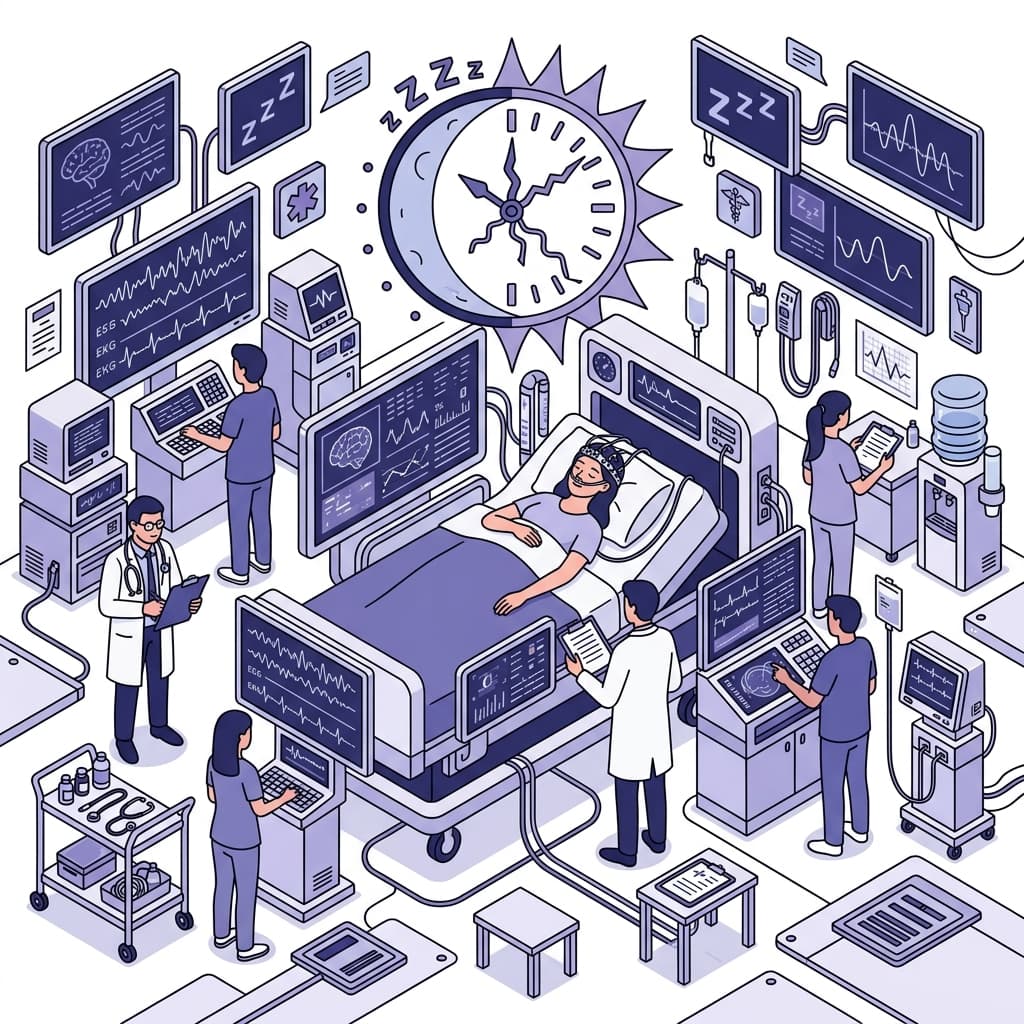
Q4. How can I measure sleep quality? A: Smartwatches and sleep tracking apps provide a reasonable approximation. For clinical diagnosis, polysomnography (PSG) at a medical facility is the standard method.
Summary: Address Sleep Problems Before They Become Chronic
Ignoring sleep problems leads to wide-ranging harm to mental and physical health.
Don't minimize symptoms with "it's probably nothing" or "maybe I'm imagining it." Use these guidelines for action:
- Improves in 1–2 weeks: Address with lifestyle changes
- Persists 1+ month or affects daily functioning: Consult a specialist
- Snoring complaints, breathing pauses, excessive daytime sleepiness: Seek attention promptly
Improving sleep quality significantly enhances daily performance, mood, and overall health.
Sleep Disorder DiagnosisSelf-check your sleep quality and assess risks for insomnia or apnea.