Bodyweight vs Machine Training for Beginners: Which Should You Choose? Full Pros and Cons Comparison
The key difference between bodyweight exercises and gym machines is the range of resistance adjustment. Beginners are often recommended to start with bodyweight training, but the optimal choice depends on your goals.
What is Bodyweight Training: Strength Training Without Equipment
Bodyweight Training refers to strength training that uses your own body weight as resistance. Without dumbbells, barbells, or machines, you build muscle through exercises like push-ups, squats, and planks.
Representative Bodyweight Exercises
- Upper Body: Push-ups, pull-ups, dips
- Lower Body: Squats, lunges, calf raises
- Core: Planks, bicycle crunches, leg raises
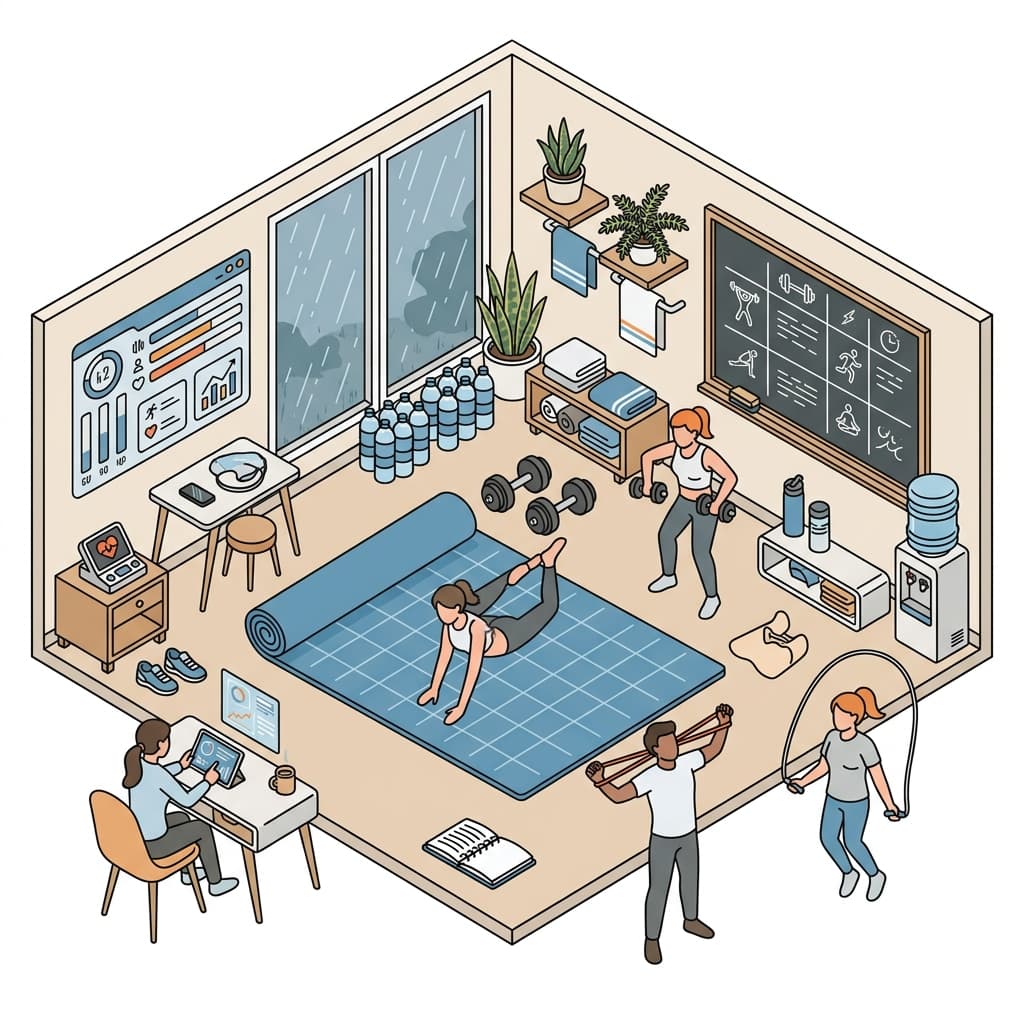
The biggest feature is that you can perform them with just one tatami mat's worth of space, no special equipment needed.
What is Gym Machine Training: Adjusting Load with Specialized Equipment
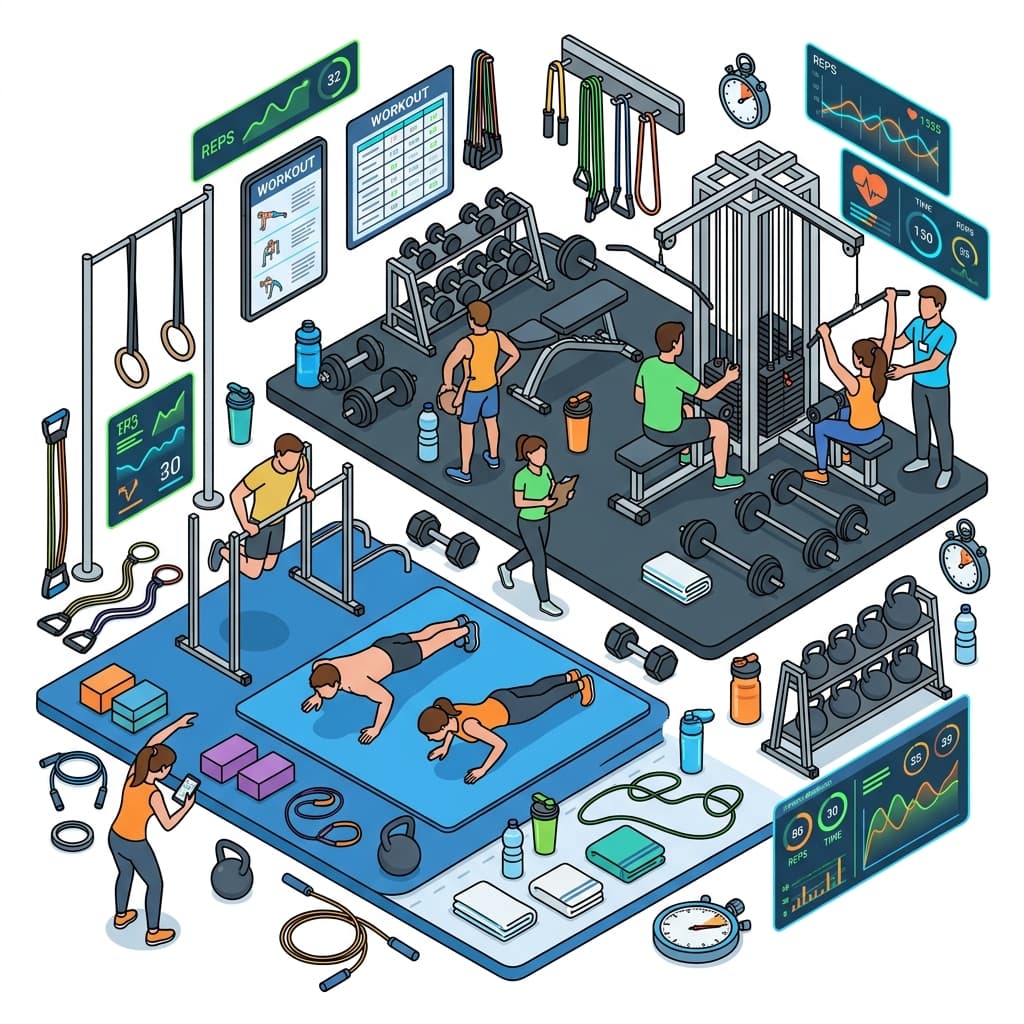
Gym machine training uses specialized machines installed in training gyms—chest press, leg press, lat pulldown, etc.—for strength training.
Representative Gym Machines
- Chest: Chest press, pec fly
- Back: Lat pulldown, seated row
- Legs: Leg press, leg extension, leg curl
- Shoulders: Shoulder press
- Arms: Biceps curl, triceps extension
Each machine has a fixed movement path, and weight can be adjusted with a single pin.
5 Advantages of Bodyweight Training
1. No Equipment, Train Anywhere
The biggest advantage: anytime, anywhere, for free.
- No gym commute time or transportation costs
- Can train at home, in parks, or hotel rooms on business trips
- Zero equipment purchase costs
For busy people or beginners without a gym habit, the barrier to consistency is dramatically lower.
2. Develops Functional Strength
Bodyweight training uses multiple muscles and joints simultaneously, building functional strength directly applicable to daily movements.
Example: Push-ups
- Pectorals, triceps (prime movers)
- Core (abs, back) maintains posture
- Balance sense also required
Unlike machines that isolate single muscles, full-body coordination improves.
3. Lower Injury Risk
Since you can't exceed your own body weight in load, there's less excessive stress on joints and tendons, making it safe for beginners.
Also, no risk of accidents like "dropping the barbell" or "losing balance" as with free weights.
4. Simple Progression (Gradual Strengthening)
Bodyweight training has intuitive difficulty adjustment.
Push-up example:
- Beginner: Knee push-ups
- Intermediate: Standard push-ups
- Advanced: One-arm push-ups, planche
By varying reps, sets, tempo, and leverage, you can infinitely increase intensity.
5. Simultaneously Trains Balance and Core
Without sitting on machines or leaning against backrests, you constantly need to support your own body. As a result, core strength and balance naturally improve.
3 Disadvantages of Bodyweight Training
1. Cannot Train with Heavy Loads
It's difficult to apply loads beyond your own body weight, so when aiming for hypertrophy (muscle growth), you'll eventually hit limits.
Especially for leg training, bodyweight squats alone often become insufficient.
2. Hard to Target Specific Muscles
Since multiple muscles work simultaneously, isolation training for "just chest" or "just back" is difficult.
For bodybuilders aiming to hypertrophy specific areas, machines or free weights are more efficient.
3. Easier to Plateau
Initially progress is smooth, but once you can do a certain number of reps, fine-tuning load becomes difficult, leading to plateaus.
Countermeasures include wearing weight vests or transitioning to more advanced exercise variations.
5 Advantages of Gym Machine Training
1. Safely Handle Heavy Loads
Machines have fixed movement paths and no risk of dropping weights, so even beginners can safely handle heavy loads.
No need for spotters as with free weights (barbells, dumbbells).
2. Easy Fine-Tuning of Load
By swapping pins, you can adjust weight in 2.5–5kg increments, making progressive overload easy to implement.
Unlike bodyweight training where you must "transition to harder variations," you simply increase the weight.
3. Focus on Target Muscles
Each machine is designed to target specific muscles, so you can stimulate the intended muscle with correct form even without conscious effort.
Example: Leg extension
- Isolates quadriceps only
- No need to balance, so full focus on the muscle
4. Faster Form Mastery
Since machines have consistent movements, form mastery is relatively simple. Beginners worry less about "I don't know the correct form."
5. High-Intensity Training in Less Time
Quick weight adjustments between sets allow short intervals for efficient high-intensity training (HIIT, etc.).
3 Disadvantages of Gym Machine Training
1. Costs Money
The biggest disadvantage is financial and time costs.
- Monthly fee: ¥5,000–¥10,000 (24-hour gyms)
- Commute time: 30 min–1 hour round trip
- Wait time during peak hours
Annually ¥60,000–¥120,000, plus non-negligible time costs.
2. Limited Range of Motion
Since machine paths are fixed, they sometimes restrict natural joint movements.
Examples:
- Shoulder rotation is limited
- Left-right strength imbalances aren't corrected well
Less freedom of movement compared to free weights or bodyweight training.
3. Less Functional Strength Development
Since machines don't require balancing, "visible muscles" may grow but they're less likely to become "usable muscles."
For sports performance improvement or daily movement enhancement, bodyweight training or free weights are more effective.
Muscle Mass CalculatorEstimate your total muscle mass and check age/gender reference values.Which Should Beginners Choose? Decision Criteria by Goal, Environment, and Budget
There's no absolute answer to "which is better, bodyweight or gym machines?" The optimal choice varies with your goal, environment, and budget.
Choose Bodyweight Training If You:
- Don't have time to go to a gym
- Want to start without spending money
- Want to complete workouts at home
- Prioritize functional strength and full-body balance
- Aim for a toned body rather than mass gain
Choose Gym Machines If You:
- Want to grow specific muscles (hypertrophy goal)
- Want to push limits with heavy loads
- Want to set up a training environment
- Want trainer guidance
- Need a "place to go" for motivation
Combining Both is Ideal
In reality, bodyweight training and gym machines aren't opposing—they're complementary.
Ideal approach:
- Beginner (0–3 months): Master basic strength and form with bodyweight
- Intermediate (3–12 months): Add gym machines to promote hypertrophy
- Advanced (1+ years): Combine bodyweight, machines, and free weights
Example weekly routine (3 days):
- Monday: Gym machines (chest, back, legs)
- Wednesday: Home bodyweight (core, full body)
- Friday: Gym machines (shoulders, arms)
Measure Progress with Lean Body Mass / Muscle Calculator
To objectively measure training effectiveness, look at "muscle mass," not just "body weight."
Why Body Weight Alone Isn't Enough
As you continue strength training, fat decreases while muscle increases, so body weight may barely change. However, body composition (muscle-to-fat ratio) should have improved significantly.
What is Lean Body Mass (LBM)?
Lean Body Mass is body weight minus body fat mass—the sum of muscle, bone, organs, and water.
Formula:
- Lean Body Mass = Body Weight × (1 - Body Fat Percentage)
Example:
- Body weight 70kg, body fat 20%
- Lean Body Mass = 70kg × (1 - 0.2) = 56kg
Estimating Muscle Mass
About 40–50% of lean body mass is estimated to be skeletal muscle.
Example:
- Lean body mass 56kg
- Muscle mass = 56kg × 0.45 = ~25kg
Recording this value monthly visualizes your training results.
Summary: Choose Bodyweight or Gym Machines Based on Your Goal
Bodyweight training and gym machines aren't about which is better—they're tools to use based on what you're aiming for.
When Bodyweight Training is Suitable
- Limited by location, time, or budget
- Prioritize functional strength and full-body balance
- Goal is toning or health maintenance over mass gain
When Gym Machines are Suitable
- Aiming for specific area hypertrophy
- Want to push limits with heavy loads
- Need training environment and motivation support
Hybrid of Both is Strongest
Beginners should first build a foundation with bodyweight training, then introduce gym machines once comfortable to efficiently increase strength and muscle mass.
Use the muscle calculator to measure regularly and confirm your growth numerically. That becomes motivation to continue.
Disclaimer
This article is for general informational purposes only and is not a substitute for medical diagnosis or treatment. If you have a medical history, injuries, or chronic conditions, please consult a doctor or trainer before starting any training program. Excessive training increases injury risk. Prioritize your physical condition and train at appropriate intensity and frequency.