Drinking Season Essential: How to Calculate Alcohol Breakdown Time and Prevent Hangovers
Learn how to calculate alcohol breakdown time for drinking season. Understand liver processing capacity, weight and gender differences, and practical tips to prevent hangovers.
Suffering Hangovers After Work Parties?
Welcome parties, farewell parties, year-end parties, New Year celebrations — opportunities to drink alcohol never seem to end throughout the year. While enjoying a good time is important, how many of us have woken up with a pounding headache and queasy stomach the morning after?
A hangover doesn't just cause discomfort — it can dramatically reduce your work performance the next day and ruin important plans.
"Just don't drink too much" is sound advice, but most people don't actually know what "too much" means for their body, or how long it takes for alcohol to leave their system.
This article explains the scientific mechanisms of alcohol metabolism, how to calculate breakdown time based on body weight and gender, and practical techniques for preventing hangovers.
Alcohol Intake CalculatorEstimate exactly when alcohol will completely clear from your system.How Alcohol Is Broken Down in Your Body
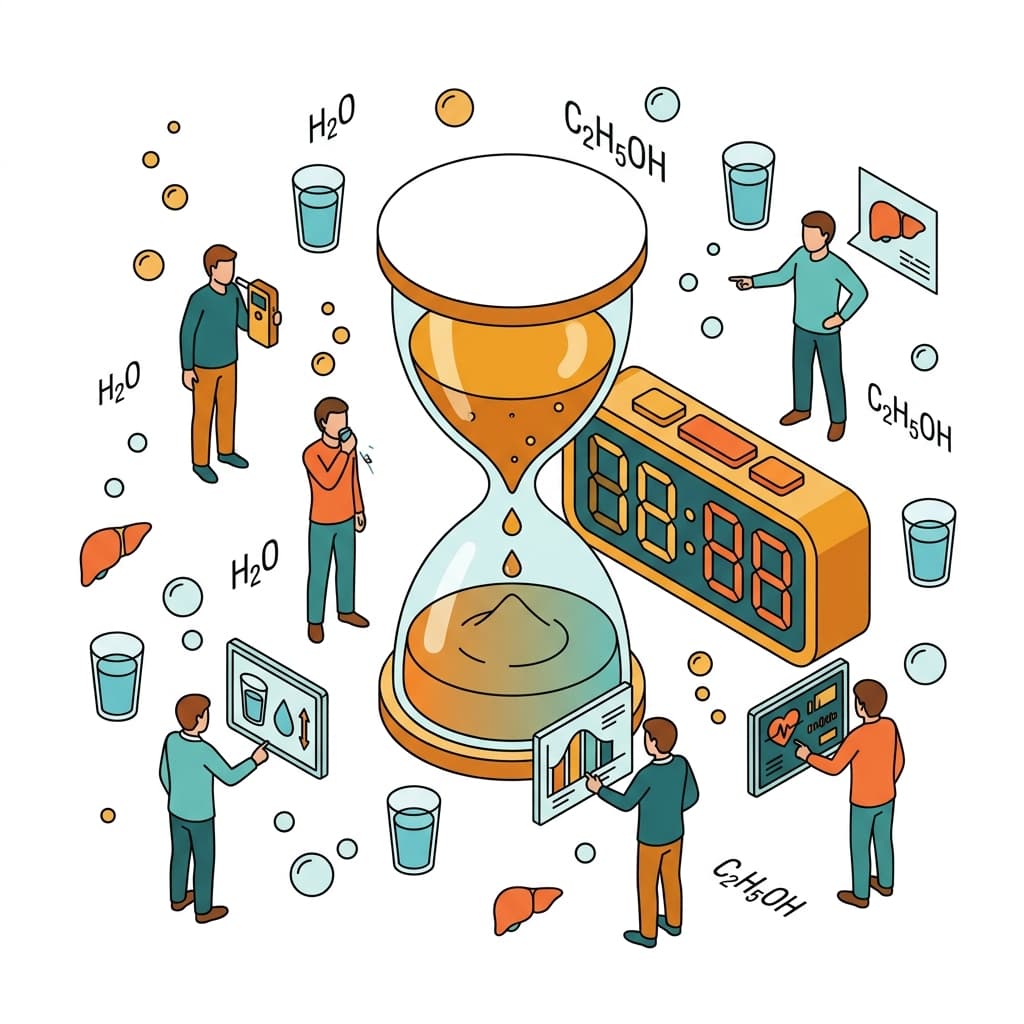
Alcohol (ethanol) you drink is absorbed through the mouth, esophagus, stomach, and small intestine before entering the bloodstream and traveling to the liver, where the main breakdown process occurs.
Two-Stage Breakdown in the Liver
Stage 1: Ethanol → Acetaldehyde Alcohol dehydrogenase (ADH) converts ethanol into "acetaldehyde." This substance is the primary culprit of hangovers — causing facial flushing, rapid heartbeat, headaches, and nausea.
Stage 2: Acetaldehyde → Acetic Acid Aldehyde dehydrogenase (ALDH2) converts the harmful acetaldehyde into harmless "acetic acid," which is finally excreted as water and carbon dioxide.
Why Some People Tolerate Alcohol Better Than Others
ALDH2 activity is genetically determined. About 40% of Japanese people have low ALDH2 activity, making them prone to flushing and hangovers with even small amounts. Another ~4% have virtually no enzyme and can barely drink at all. The notion of "building tolerance" has no scientific basis — the liver burden remains the same regardless of drinking habits.
How to Calculate Alcohol Breakdown Time
The standard estimate for alcohol processing speed is approximately 0.1g of ethanol per kilogram of body weight per hour.
Calculating Pure Alcohol Content
Pure alcohol (g) = Volume (ml) × ABV (%) ÷ 100 × 0.8 (alcohol density)
Pure Alcohol Content Per Standard Drink
| Beverage | Amount | ABV | Pure Alcohol |
|---|---|---|---|
| Beer (medium bottle) | 500ml | 5% | ~20g |
| Canned Chu-hi | 350ml | 7% | ~20g |
| Sake (1 go) | 180ml | 15% | ~22g |
| Wine (1 glass) | 120ml | 12% | ~12g |
| Highball (single) | 30ml whisky | 40% | ~10g |
| Whisky (double) | 60ml | 40% | ~19g |
Calculation Examples
60kg person drinking 1 medium beer (20g):
- Processing rate = 60kg × 0.1g = 6g/hour
- Breakdown time = 20g ÷ 6g = approximately 3.3 hours
60kg person drinking 3 beers at a party (~60g):
- Breakdown time = 60g ÷ 6g = approximately 10 hours
If you stop drinking at 9 PM and wake up at 7 AM, alcohol may still be present in your system.
Alcohol Intake CalculatorEstimate exactly when alcohol will completely clear from your system.Breakdown Time Differences by Gender and Weight
Why Women Metabolize Alcohol More Slowly
Even at the same body weight, women tend to metabolize alcohol 20-30% more slowly than men for two main reasons:
- Lower body water percentage: Women's bodies contain less water, so alcohol concentrates more easily in the blood
- Less ADH enzyme in gastric mucosa: Women have less alcohol dehydrogenase in the stomach
50kg woman drinking the equivalent of 3 beers (60g) — rough estimate:
- Male processing rate = 50kg × 0.1g = 5g/hour
- Female rate ≈ 20% less = 4–5g/hour
- Breakdown time = 60g ÷ 4g = 12–15 hours
This means alcohol may still be present until near noon the following day.
Alcohol Metabolism and Age
After your 30s, liver processing capacity gradually declines. If the same amount you drank in your 20s affects you more now, your metabolic capacity has actually decreased. Reviewing your drinking habits is particularly important after 40.
Practical Techniques to Prevent Hangovers
Before Drinking
Never drink on an empty stomach On an empty stomach, alcohol passes quickly to the small intestine and is rapidly absorbed. Eat a meal first, or at minimum have bread, cheese, or other protein/fat foods before starting.
Choose liver-supporting foods Oysters, clams, scallops, clam miso soup, tomatoes, and broccoli are rich in nutrients (taurine, lycopene) that support liver function. Actively choose these from the menu at izakayas.
Smarter Drinking Habits
Drink one glass of water between each alcoholic drink Known as a "chaser," drinking water alongside alcohol slows the rise in blood alcohol concentration and prevents dehydration headaches.
Aim for under 20g pure alcohol per hour Given liver processing capacity, keeping intake to under 20g per hour (roughly one medium beer) is a practical guideline for hangover prevention.
Avoid straws and carbonated mixers Carbonated drinks accelerate alcohol absorption. Straws can also increase absorption — avoid them when possible.
Post-Drinking Care
Hydrate before bed Alcohol has a diuretic effect. Drinking about 500ml of water or low-sugar sports drink before sleep can significantly reduce morning headaches.
Wait before sleeping If you immediately pass out drunk, your liver works overtime during sleep and your sleep quality suffers. Drink water and wait until alcohol levels decrease before lying down.
Sleep CalculatorWhat time should I sleep? Calculate your 90-minute sleep cycles to wake up refreshed.Dangerous Behaviors to Avoid
Don't mask alcohol with caffeine Drinking coffee to feel alert doesn't speed alcohol metabolism. "I feel sharp now so driving is fine" is completely false and dangerous.
Watch for medication interactions Taking acetaminophen pain relievers with alcohol dramatically increases liver burden. Always consult a pharmacist before combining alcohol with any medication.
Nightcaps harm sleep quality Small amounts of alcohol may induce drowsiness, but they significantly degrade sleep quality. REM sleep decreases and nighttime awakenings increase, leading to greater fatigue the next day.
Warning: Acute Alcohol Poisoning
Acute alcohol poisoning is a life-threatening emergency. Call 119 immediately if any of the following symptoms are present:
- Unconscious or unresponsive to voice
- Slow or irregular breathing
- Cold, pale, or bluish skin
- Vomiting while unconscious (risk of airway obstruction)
Emergency contacts (Japan): Ambulance: 119 / After-hours medical advice: #7119
⚠️ This article provides health information only and does not constitute medical advice. If you have health concerns, please consult a medical professional.
Frequently Asked Questions
Q1. Does sweating in a bath or sauna remove alcohol faster? A: Only a tiny fraction of alcohol is excreted through sweat. Taking a bath after drinking increases body temperature, causes dehydration, and raises heart rate — actually creating more strain. Avoid baths after drinking.
Q2. If I need to drive in the morning, when should I stop drinking? A: A 60kg person who drinks the equivalent of 3 beers (60g) needs over 10 hours to fully metabolize it. However, these are estimates with significant individual variation. The absolute rule is: never drive after drinking. We strongly recommend avoiding driving entirely the day after any alcohol consumption.
Q3. Are there foods that help with hangovers? A: Clam miso soup, tofu, bananas, honey, and eggs contain nutrients (taurine, fructose, vitamin B1) that support alcohol metabolism. Consume in moderate amounts.
Q4. Does taking turmeric before drinking help? A: Turmeric (curcumin) is expected to support liver function, but it doesn't fundamentally speed up alcohol breakdown. Don't rely on it too heavily.
Summary: Enjoy Parties While Protecting Your Next Day
Alcohol takes much longer to leave your system than most people realize. Understanding your own breakdown time based on body weight, gender, and how much you drink is the most reliable way to prevent hangovers.
To enjoy drinking events while protecting your next day, practice these three habits:
- Never drink on an empty stomach: Eat first, choose protein and fat-containing dishes
- Alternate with water: One glass of water for every alcoholic drink
- Calculate your breakdown time: Work backwards from your morning schedule to decide how many drinks and by when to stop