Losing 1–2% of Muscle Mass per Year: How to Prevent Sarcopenia and Maintain Muscle with Age
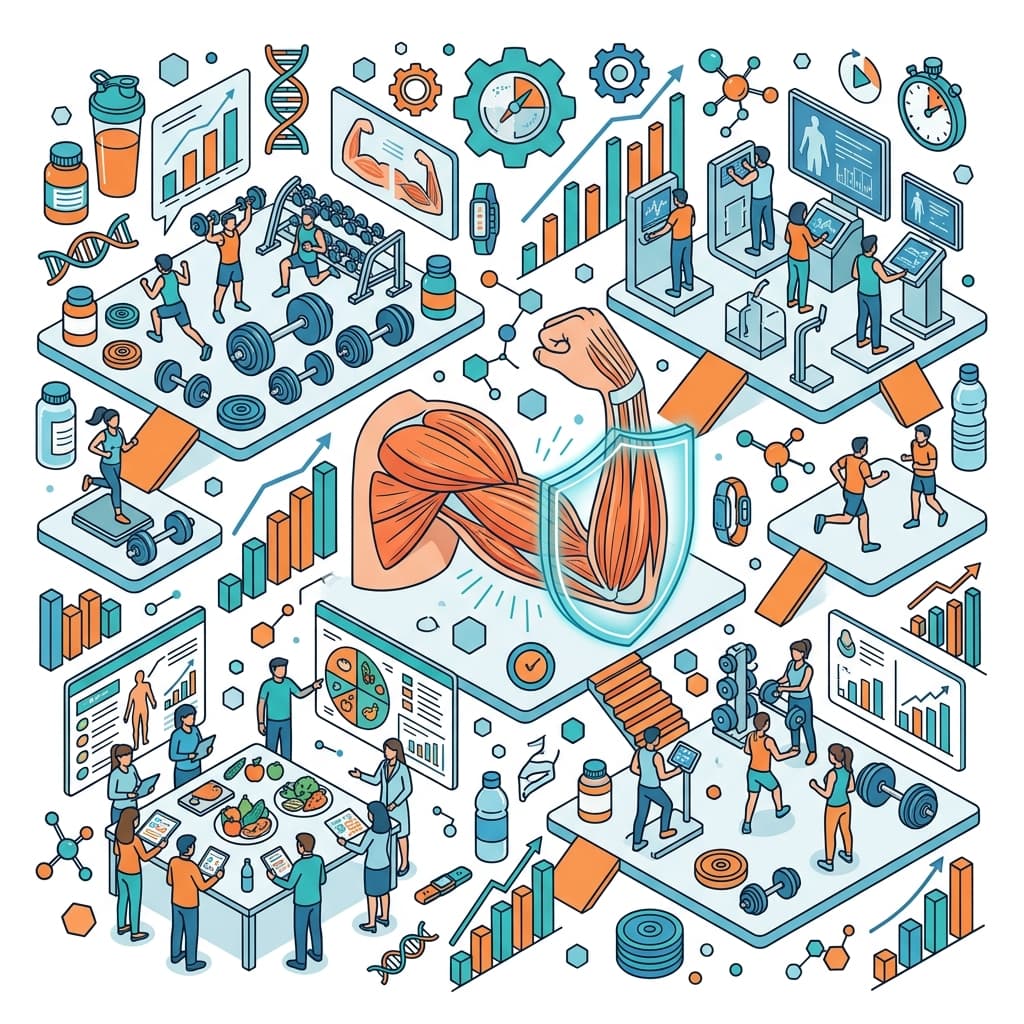
After 40, you lose 1–2% of muscle mass per year — a condition called sarcopenia. Learn the science behind age-related muscle loss and evidence-based strategies to maintain and rebuild muscle at any age.
How Much Muscle Do You Lose with Age?
Many people in their late 30s start feeling "more fatigued lately" or "not as strong as before." This isn't just your imagination — it's partly due to sarcopenia, the age-related loss of muscle mass and strength.
Muscle mass peaks in your 20s and gradually decreases thereafter. After age 40, you lose approximately 1–2% of muscle mass per year, with the rate accelerating further after 70. Without intervention, you can lose 40–50% of your peak muscle mass over a lifetime.
What Is Sarcopenia?
Sarcopenia (from Greek: "sarx" = flesh, "penia" = deficiency) refers to age-related loss of skeletal muscle mass, strength, and physical function. In Japan, approximately 10–15% of adults over 65 have sarcopenia, significantly increasing the risk of falls, fractures, and the need for nursing care.
Three Mechanisms of Muscle Loss
① Hormonal Changes
- Declining testosterone and growth hormone: These anabolic hormones decrease from your 30s onward (testosterone drops ~1–2% per year in men)
- Relative increase in cortisol: The muscle-breaking stress hormone becomes relatively dominant
② Nervous System Changes
Motor neurons are lost with age, and fast-twitch muscle fibers (for explosive movements) are preferentially affected — which is why reaction times slow down and sudden movements become harder, increasing fall risk.
③ Reduced Protein Metabolism Efficiency
Aging reduces "anabolic sensitivity" — the efficiency with which dietary protein is converted into muscle tissue. Older adults need more protein per meal to achieve the same muscle protein synthesis as younger people.
5 Strategies to Maintain and Build Muscle
1. Resistance Training
The most effective method is resistance training 2–3 times per week. Research shows muscle mass can be increased at any age — even in your 80s and 90s.
Recommended exercises:
- Squats: Targets major leg and glute muscles; excellent for fall prevention
- Push-ups: Upper body strength (chest, shoulders, triceps)
- Deadlifts: Comprehensive back, hamstring, and core strength
- Calf raises: Calf strengthening and improved circulation
Beginners and older adults should start with bodyweight exercises like chair squats or wall push-ups.
2. Adequate Protein Intake
While Japan's Dietary Reference Intakes recommend 1.0g/kg body weight for those 65+, 1.2–1.6g/kg body weight is recommended for maintaining or building muscle.
For a 60kg person, that means 72–96g of protein daily.
Good protein sources:
- Chicken breast (approximately 23g per 100g)
- Eggs (approximately 6g per egg)
- Natto (approximately 7g per 40g pack)
- Greek yogurt (approximately 10g per 100g)
- Mackerel/salmon (approximately 20g per 100g)
3. Protein Distribution Across Meals
Research shows 20–40g of protein per meal optimally stimulates muscle protein synthesis. Distribute protein evenly across 3 meals rather than consuming it all at once.
4. Quality Sleep
Growth hormone is primarily secreted during deep non-REM sleep (the first 90–120 minutes). Getting 7–9 hours of quality sleep is essential for muscle recovery and synthesis. Sleep deprivation reduces testosterone and IGF-1, accelerating muscle breakdown.
5. Vitamin D and Magnesium
- Vitamin D: Essential for muscle contraction; deficiency leads to muscle weakness. Get 15–30 minutes of sun exposure daily, or eat salmon and mushrooms
- Magnesium: Involved in protein synthesis and ATP utilization for muscle contractions. Found in nuts, soybeans, and brown rice
Assess Your Muscle Mass
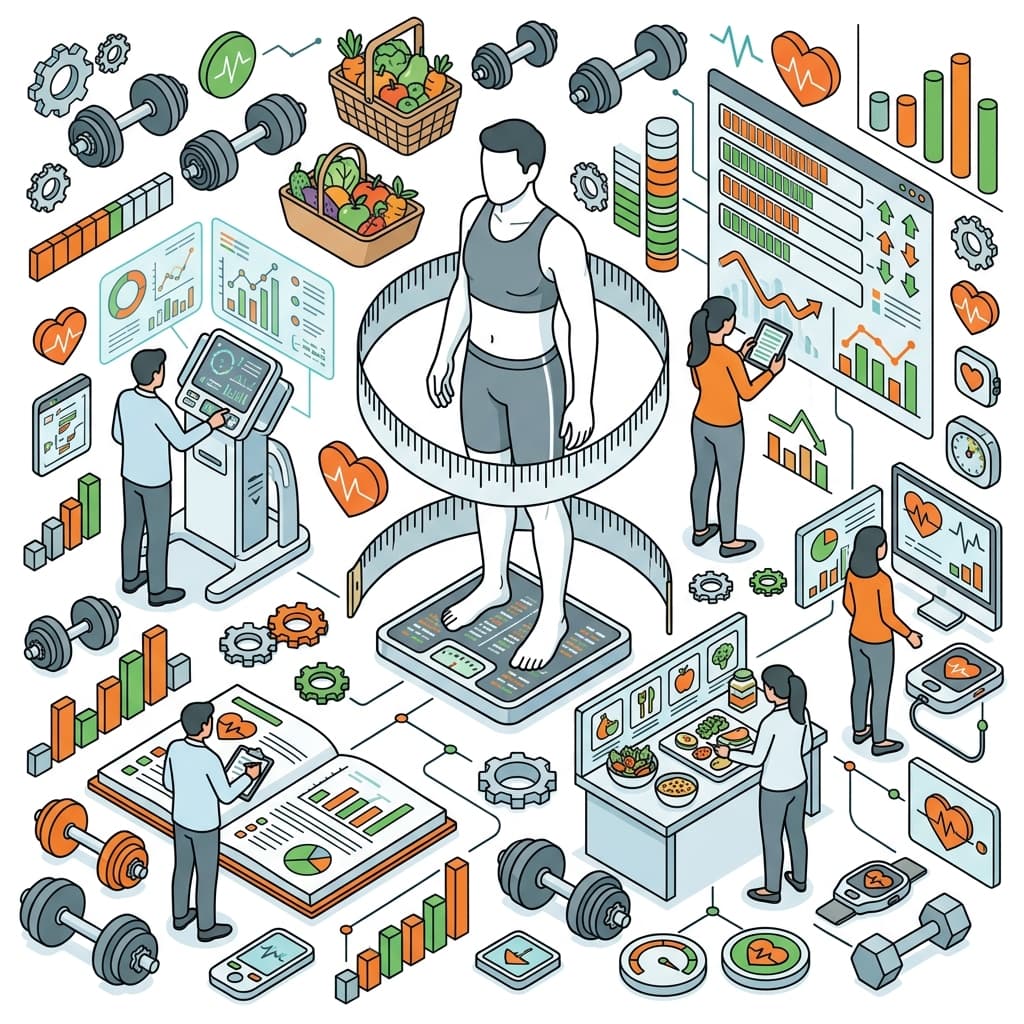
The Skeletal Muscle Mass Index (SMI) is used to diagnose sarcopenia: limb muscle mass (kg) divided by height squared (m²). Below 7.0 kg/m² (men) or 5.7 kg/m² (women) indicates sarcopenia (Japan Society of Sarcopenia, Frailty and Rehabilitation Medicine, 2017 criteria).
Muscle Mass CalculatorEstimate your total muscle mass and check age/gender reference values. BMI CalculatorCalculate your Body Mass Index (BMI) to see your health standing.FAQ
Q: Is it too late to start strength training? A: Absolutely not. Research has shown that even adults in their 90s can increase muscle mass and strength with resistance training (Fiatarone et al., 1994). What matters is starting at an appropriate intensity and being consistent.
Q: Can cardio alone maintain muscle mass? A: Aerobic exercise is great for cardiovascular health and fat burning, but insufficient for maintaining muscle mass. You need resistance training with adequate load. The combination of both is ideal.
Q: Are protein supplements necessary? A: Whole foods are the foundation, but appetite decreases and digestion efficiency declines with age. If adequate protein from diet alone is difficult, protein supplements can be a helpful addition. Those with kidney disease should consult a doctor first.
Conclusion
Age-related muscle loss is inevitable, but the right knowledge and approach can dramatically slow the process. Combining resistance training 2–3 times weekly with adequate protein intake (1.2–1.6g/kg body weight) allows you to maintain and even increase muscle mass at any age.
Start by understanding your current body composition, then set achievable goals and take the first step toward a longer, healthier life.
Muscle Mass CalculatorEstimate your total muscle mass and check age/gender reference values.