Muscle Training Results Timeline: What Changes in 1 Week, 1 Month, 3 Months, and 6 Months
Wondering when your workouts will show results? Understand the 3-phase science of strength training progress: neural adaptation, hypertrophy, and visible physique changes — and realistic timelines for each.
"Nothing's Changing After a Month" — Here's Why That's Normal
Giving up on strength training because you "don't see results" after 4–6 weeks is one of the most common fitness mistakes. The reason: muscle adaptation happens in distinct phases, and the visible phase takes the most time.
Understanding the timeline helps you trust the process and stay consistent through the critical early months.
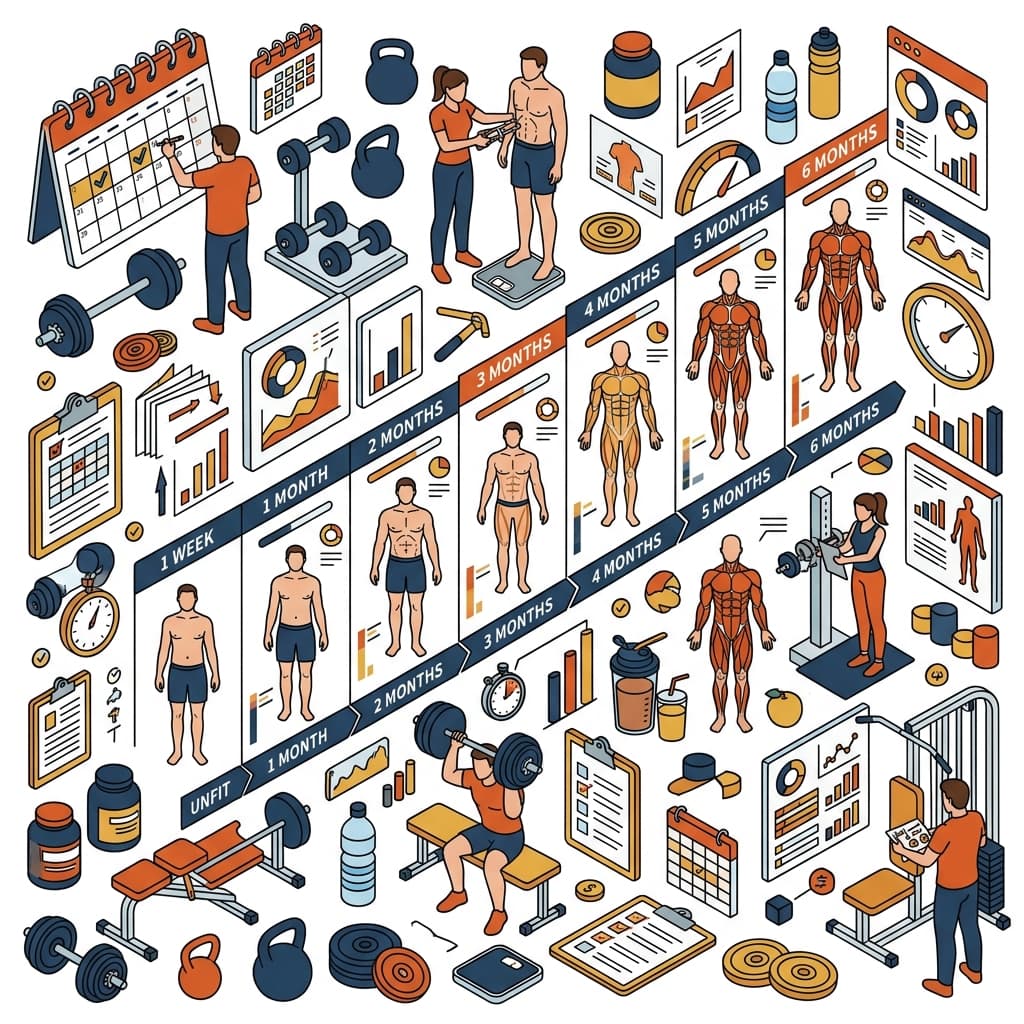
The 3 Phases of Muscle Training Results
Phase 1: Neural Adaptation (Weeks 1–4)
In the first 1–4 weeks, your nervous system — not your muscles — changes the most. Your brain becomes better at recruiting more muscle fibers simultaneously, and movement patterns become more efficient.
What you'll notice:
- The same weight starts feeling lighter
- Movements become smoother and more coordinated
- Muscle soreness (DOMS) decreases for familiar exercises
There's minimal visible change, but real physiological progress is occurring.
Phase 2: Muscle Hypertrophy Begins (Weeks 4–8)
After 4 weeks, actual muscle fiber changes begin. The cycle of micro-damage → repair → thicker fiber formation drives measurable increases in muscle cross-sectional area.
What you'll notice:
- Weights/reps increase progressively
- Muscles feel "fuller" or harder to the touch
- Body weight may stay the same or slightly increase (muscle gain offsetting fat loss)
Visible changes in the mirror require a bit more time.
Phase 3: Visible Changes (3 Months Onward)
At 12 weeks (3 months) of consistent training, most people see clearly visible physique changes.
What you'll notice:
- Shoulders, chest, and arms become visibly more defined
- Body fat percentage decreases, creating sharper contours
- Others start commenting on physique improvements
Research shows measurable muscle mass increases require 6–8 weeks, while mirror-visible changes typically emerge at 12–16 weeks.
Muscle Mass CalculatorEstimate your total muscle mass and check age/gender reference values. BMR CalculatorCalculate your Basal Metabolic Rate (BMR) for precise diet planning.6 Months and Beyond
At 6 months: With 2–3 training sessions per week and proper nutrition, body fat may drop 5–10% and muscle mass increase by 3–5kg.
At 1 year: Beginners can gain 4.5–9kg of muscle in their first year — known as "beginner's gains," the rapid initial growth period unique to new trainees.
The 3 Requirements for Muscle Growth
1. Progressive Overload
Muscles adapt to the current stimulus and stop growing. Continuously increase the challenge:
- Increase weight
- Increase reps or sets
- Reduce rest time between sets
2. Adequate Protein
Recommended intake for muscle gain: 1.6–2.2g per kg of body weight per day.
For a 70kg person: 112–154g protein daily.
3. Recovery Time (Supercompensation)
Muscles grow during recovery, not during exercise. The same muscle group needs 48–72 hours of rest between sessions.
Training the same muscles daily is counterproductive.
Muscle Soreness: A Poor Progress Indicator
Contrary to "no pain, no gain," muscle soreness (DOMS) is NOT a reliable indicator of training effectiveness:
- Hypertrophy occurs without soreness
- Greater soreness doesn't mean greater growth
- Reduced soreness with the same exercise is normal and expected (neural and muscular adaptation)
Staying Motivated Through the 3-Month Transition
The first 3 months — before visible changes appear — have the highest dropout rate.
Retention strategies:
- Track numbers: Log weight, reps, and body measurements weekly. Numbers change before the mirror does
- Monthly progress photos: Take comparison photos monthly under the same conditions. 3-month comparisons are often striking
- Abandon perfectionism: Missing one week doesn't erase progress — only quitting does
- Find community: Training partners or online communities significantly improve adherence
FAQ
Q: Can women build muscle as effectively as men? A: Women have approximately 1/10–1/20 the testosterone of men, so absolute muscle mass gains are smaller. However, the relative strength improvements, fat-burning benefits, metabolic boost, and body composition improvements are equally achievable.
Q: Is daily training effective? A: Daily training of the same muscle group isn't recommended. Split routines (training different muscle groups each day) allow daily training while preserving recovery time for each group.
Q: Should I do cardio before or after weights? A: For muscle building, weights first, then cardio. Starting with cardio depletes glycogen and reduces the intensity of your resistance training, limiting hypertrophy stimulus.
Conclusion
Strength training results emerge in three phases:
- Weeks 1–4: Neural adaptation (strength sensation improves)
- Weeks 4–8: Hypertrophy begins (palpable muscle changes)
- Months 3–6: Visible physique changes (mirror-visible transformation)
Trust the process. Consistent training + adequate protein + proper recovery is the only reliable path to results.
Muscle Mass CalculatorEstimate your total muscle mass and check age/gender reference values.Related Articles