Is Drinking Before Bed Good or Bad for Sleep? The Science of Alcohol and Sleep Quality
Alcohol helps you fall asleep — but it significantly disrupts sleep quality in the second half of the night. Learn why bedtime drinking harms REM sleep, causes nighttime awakenings, and how long before sleep you should stop drinking.
Alcohol and Sleep: A Half-Truth With Serious Consequences
The belief that alcohol helps you sleep is half-true — and the other half is damaging.
The true half: Alcohol activates GABA receptors (central nervous system depressants), accelerating sleep onset. You do fall asleep faster.
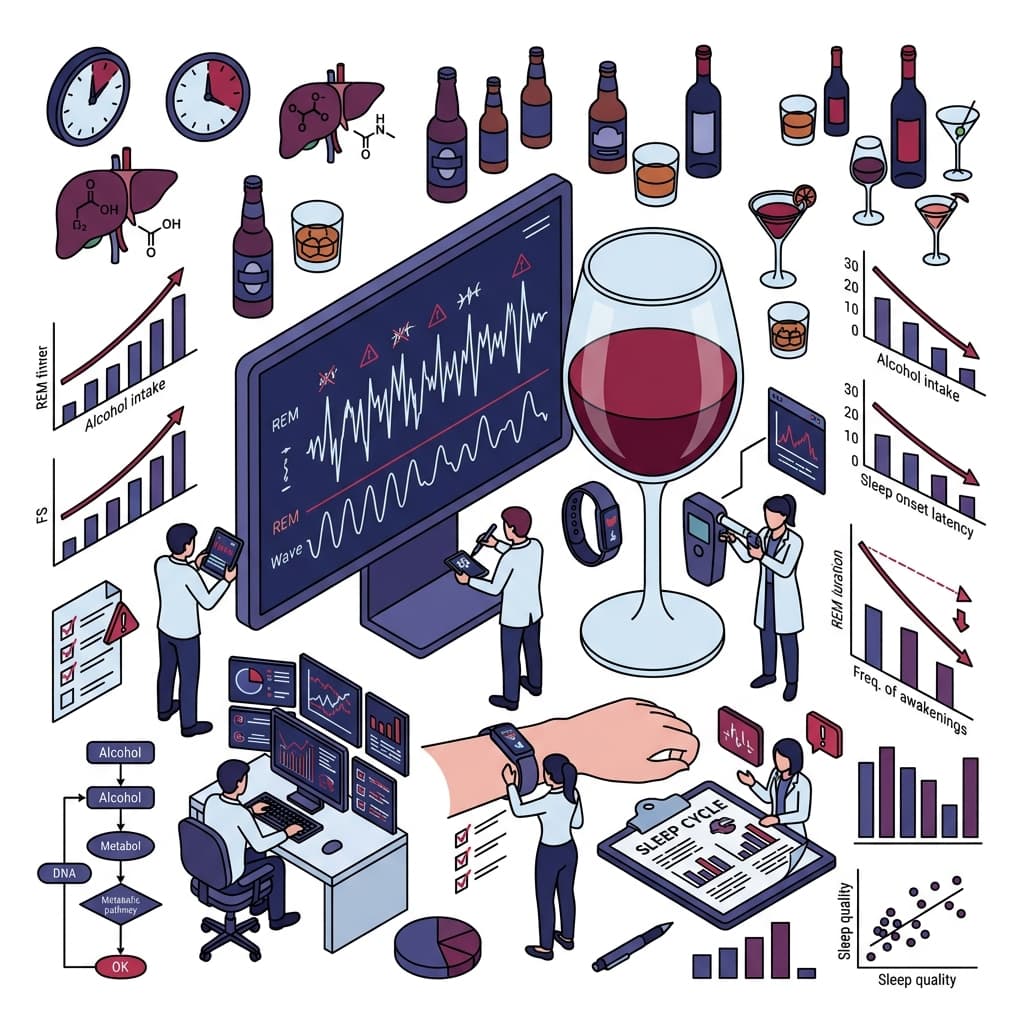
The false half: In the second half of the night, alcohol severely suppresses REM sleep and increases nighttime awakenings, dramatically reducing overall sleep quality.
The trade-off: fall asleep faster, sleep worse overall.
How Alcohol Disrupts Sleep Architecture
1. REM Sleep Suppression
Normal sleep cycles alternate between non-REM sleep (deep restorative sleep) and REM sleep (dream sleep) in ~90-minute cycles throughout the night.
Alcohol increases deep NREM sleep in the first half but significantly suppresses REM sleep in the second half of the night.
Why REM sleep matters:
- Memory consolidation (especially emotional memories)
- Mental stress processing
- Creative problem-solving
- Neural maintenance and pruning
REM deprivation causes morning grogginess, emotional reactivity, and impaired learning.
2. Increased Nighttime Awakenings
When alcohol metabolizes (4–6 hours after drinking), its byproduct acetaldehyde has arousal-promoting effects, pulling you out of sleep. Combined with alcohol's diuretic effect (which fills the bladder), middle-of-the-night awakenings increase substantially.
3. Rebound Effects
While deep sleep increases on the drinking night, the following nights often show REM rebound (compensatory REM surge), disrupting sleep architecture for multiple nights after drinking.
4. Worsened Snoring and Sleep Apnea
Alcohol relaxes upper airway muscles. Even moderate drinkers experience increased snoring. For those with Sleep Apnea Syndrome (SAS), alcohol significantly increases apnea episode frequency and duration — a serious safety concern.
Sleep CalculatorWhat time should I sleep? Calculate your 90-minute sleep cycles to wake up refreshed.Alcohol Metabolism and the "3-Hour Rule"
Approximate pure alcohol metabolism rate: ~4–5ml/hour (for a 60–70kg person)
| Drink | Amount | Pure Alcohol | Estimated Processing Time |
|---|---|---|---|
| Beer (5%) | 350ml can | ~14g (~17.5ml) | ~3.5–4.4 hours |
| Sake (15%) | 1 go (180ml) | ~21.6g (~27ml) | ~5.4–6.8 hours |
| Wine (12%) | 1 glass (150ml) | ~14.4g (~18ml) | ~3.6–4.5 hours |
| Whisky (40%) | Single (30ml) | ~9.6g (~12ml) | ~2.4–3 hours |
Individual variation: body weight, sex, liver function, and whether you've eaten significantly affect these estimates.
The 3-Hour Rule: Even for light drinking (~1 standard drink), finishing at least 3 hours before bedtime minimizes sleep disruption.
Alcohol Intake CalculatorEstimate exactly when alcohol will completely clear from your system. BAC CalculatorCalculate Blood Alcohol Concentration and estimated time to sober up based on weight and drinks.The Vicious Cycle of Habitual Drinking for Sleep
Using alcohol to sleep creates a self-reinforcing trap:
- Tolerance develops — same amount no longer induces sleep
- Gradually drink more to achieve the same effect
- Sleep quality chronically deteriorates
- Daytime fatigue and cognitive impairment increase
- Drink again to cope... → repeat
This pattern is a recognized pathway toward alcohol use disorder.
The Japanese Ministry of Health recommends a maximum of 20g pure alcohol per day for men as a guideline for moderate drinking (less for women and elderly).
Solutions
Immediate Changes
- Stop drinking at least 3 hours before bed
- Drink water after alcohol (combats dehydration and reduces awakenings)
- Choose not to drink the night before important days
Long-Term Habits
- Replace "nightcap" routines with relaxation practices: warm bath, reading, breathing exercises
- Set at least 2 alcohol-free days per week
- If you've been drinking to sleep for 2+ weeks, consult a doctor — underlying insomnia may require treatment
FAQ
Q: Does a small amount of alcohol still affect sleep? A: Yes — even sub-1-drink amounts produce measurable changes in sleep architecture. The impact scales with quantity, so smaller amounts drunk earlier minimize (but don't eliminate) the effect.
Q: Is there a way to drink and not disrupt sleep? A: No. The only sleep-safe approach is not drinking. If you do drink, small amounts consumed early (dinner rather than late night) minimize harm.
Q: Are non-alcoholic beers safe for sleep? A: Non-alcoholic beer (0.00% alcohol) does not produce alcohol-related sleep disruption. However, some of the perceived relaxation effect of drinking may not transfer, as it partly comes from ethanol's pharmacological action.
Conclusion
Alcohol's relationship with sleep:
- Falling asleep: Improved (accelerated sleep onset)
- Sleep quality: Significantly harmed (REM suppression, more awakenings)
- Snoring/apnea: Worsened
- Habitual use: Tolerance → dose escalation → chronic sleep degradation
Drinking to sleep is a short-term fix with long-term costs. Start with the 3-hour rule — no drinks within 3 hours of bedtime — and gradually replace alcohol-based relaxation with genuine sleep-promoting habits.
Sleep CalculatorWhat time should I sleep? Calculate your 90-minute sleep cycles to wake up refreshed.Related Articles