The Science of Power Naps: How Long Should You Sleep for Maximum Effect?
Napping isn't laziness—it's a scientifically proven productivity tool used by NASA, Google, and elite athletes. Learn the optimal nap durations and how to harness power naps for peak performance.
Napping Is a Scientific Strategy, Not Laziness
Think napping is for the lazy? Think again. Power naps are scientifically proven to improve cognitive function, productivity, and mood—and they're actively embraced by NASA, Google, Nike, and professional athletes worldwide.
Working through the afternoon with growing fatigue is like trying to run a marathon on empty. A well-timed 20-minute nap can dramatically restore your performance for the next several hours.
Sleep CalculatorWhat time should I sleep? Calculate your 90-minute sleep cycles to wake up refreshed.Nap Duration Guide: How Long Should You Sleep?
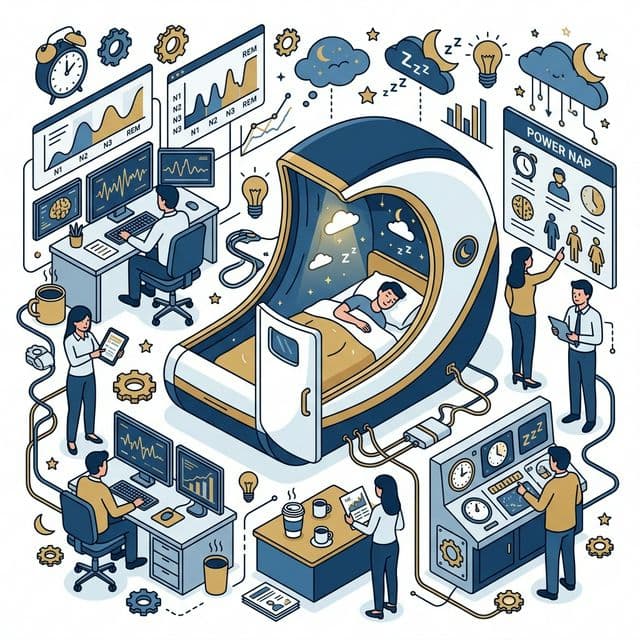
Nap effectiveness varies dramatically based on duration. Sleep progresses through stages, and waking from deep sleep causes "sleep inertia"—that groggy, disoriented feeling that impairs performance for 30+ minutes.
10–20 Minutes (Power Nap): The Sweet Spot
The ideal office or work-from-home nap.
- Stays in light NREM sleep (Stages 1–2)
- Wake up immediately alert (minimal sleep inertia)
- Instant improvement in alertness, attention, and task efficiency
- Mood improvement and stress reduction
The landmark NASA study (1995) found that a 26-minute nap improved pilot cognitive performance by 34% and alertness by 54%.
30–60 Minutes (Middle Nap): Proceed with Caution
The body begins entering deep NREM sleep (Stage 3), causing significant sleep inertia upon waking.
- 15–30 minutes of grogginess after waking
- Benefits memory consolidation and learning
- Avoid before driving, presentations, or important meetings
90 Minutes (Full Cycle Nap): For Deep Recovery
Completes one full sleep cycle (NREM + REM), minimizing sleep inertia by ending at a natural waking point.
- Little to no sleep inertia (waking after REM sleep)
- Enhances creativity, emotional processing, and procedural memory
- Minimal disruption to nighttime sleep
- Limitation: Rarely practical during a work day
Summary Table
| Duration | Sleep Stage | Waking State | Best For |
|---|---|---|---|
| 10–20 min | Light (S1-2) | Immediately alert | Lunch break, work day |
| 30–60 min | Deep (S3) | Groggy for 15–30 min | Emergency recovery |
| 90 min | Full cycle | Refreshed | Days off, before night shift |
Optimal Nap Timing: 1–3 PM
The human body experiences two daily low points in alertness driven by circadian rhythm:
- 2–4 AM (overnight)
- 1–3 PM (early afternoon)
The post-lunch dip is intensified by blood sugar fluctuations after eating and a natural drop in core body temperature—the same conditions that facilitate sleep onset at night. Napping during this window aligns with your body's natural rhythms.
Warning: Napping after 3 PM significantly increases the risk of disrupting nighttime sleep.
The Coffee Nap: Combining Caffeine and Sleep
The coffee nap (also called "caffeine nap") is one of the most effective napping strategies: drink coffee immediately before a 20-minute nap.
Why It Works
Caffeine takes approximately 20–30 minutes to be absorbed and reach peak effect. By drinking coffee right before napping:
- Drink coffee
- Immediately take a 20-minute nap
- Wake up as caffeine begins taking effect
- Nap recovery + caffeine boost simultaneously = maximum alertness
A Loughborough University study confirmed that coffee nappers made significantly fewer errors in driving simulators compared to nap-only or rest-only groups.
Alternatives When You Can't Nap
1. Eyes-Closed Rest
Simply closing your eyes and resting blocks visual input to the brain, reducing cognitive fatigue even without actual sleep. Even 5–10 minutes helps.
2. Mindfulness Meditation
5–10 minutes of meditation produces brain wave patterns similar to light sleep. Free apps like Insight Timer make guided sessions easily accessible.
3. Strategic Micro-Breaks
Cycle through 25-minute work blocks with mandatory 5-minute breaks. This prevents large fatigue accumulation before it requires a nap to recover.
Pomodoro TimerBoost your focus with a 25-minute Pomodoro timer featuring browser alerts.The Science Behind Siesta Culture
Spain's siesta tradition isn't merely cultural—it evolved as a rational adaptation to intense heat and sunlight during the afternoon hours.
A landmark Greek study (2007, ~24,000 participants) found that people who napped at least three times per week had a 37% lower risk of dying from heart disease than non-nappers.
Japan is increasingly adopting workplace napping: NHK, Japan Airlines, Nike Japan, and many other companies have installed dedicated nap rooms or nap policies.
5 Tips for Better Nap Quality
- Darken the room: Reduced light stimulates melatonin production and eases sleep onset
- Block noise: Noise-canceling headphones or earplugs significantly improve sleep quality
- Lie down if possible: Horizontal position facilitates sleep better than sitting (a reclining chair works if lying down isn't an option)
- Set an alarm: 20–25 minutes—prevent oversleeping and the associated grogginess
- Keep it cool: Core body temperature naturally drops during sleep; a room around 18–22°C (64–72°F) supports faster sleep onset
FAQ
Q. Will napping make it harder to sleep at night?
A. A 20-minute nap before 3 PM has virtually no impact on nighttime sleep quality for most people. Problems arise when napping too long (over 90 minutes) or too late in the afternoon. Stick to the "before 3 PM, under 20 minutes" guideline.
Q. I lie down but can't actually fall asleep. Is napping still useful?
A. Absolutely. Closing your eyes and resting quietly reduces cognitive load even without sleep onset. The pressure to "actually fall asleep" can itself prevent relaxation—let go of that requirement and simply rest. Many of the benefits occur even in the drowsy semi-sleep state.
Q. Is it okay to nap every day?
A. For healthy adults, a daily short nap is generally fine and may even be beneficial. However, if you're using naps to compensate for chronic nighttime sleep deprivation, address the root cause first. If you find yourself suddenly needing more sleep than usual, consult a healthcare provider.
Summary: 20 Minutes to Peak Afternoon Performance
The power nap is one of the most powerful and underutilized performance tools available:
- Optimal duration: 10–20 minutes (stay in light sleep)
- Optimal timing: 1–3 PM
- Pro move: Coffee nap—drink caffeine before your nap for compounded benefits