Japan's ¥1.06M and ¥1.3M Income Walls: How Part-Time Workers Navigate Social Insurance Thresholds
Two critical income thresholds shape part-time work in Japan: the ¥1.06M wall and the ¥1.3M wall. Learn how these affect social insurance coverage, take-home pay, and what recent 2024–2025 policy changes mean for you.
What Are Japan's "Income Walls"?
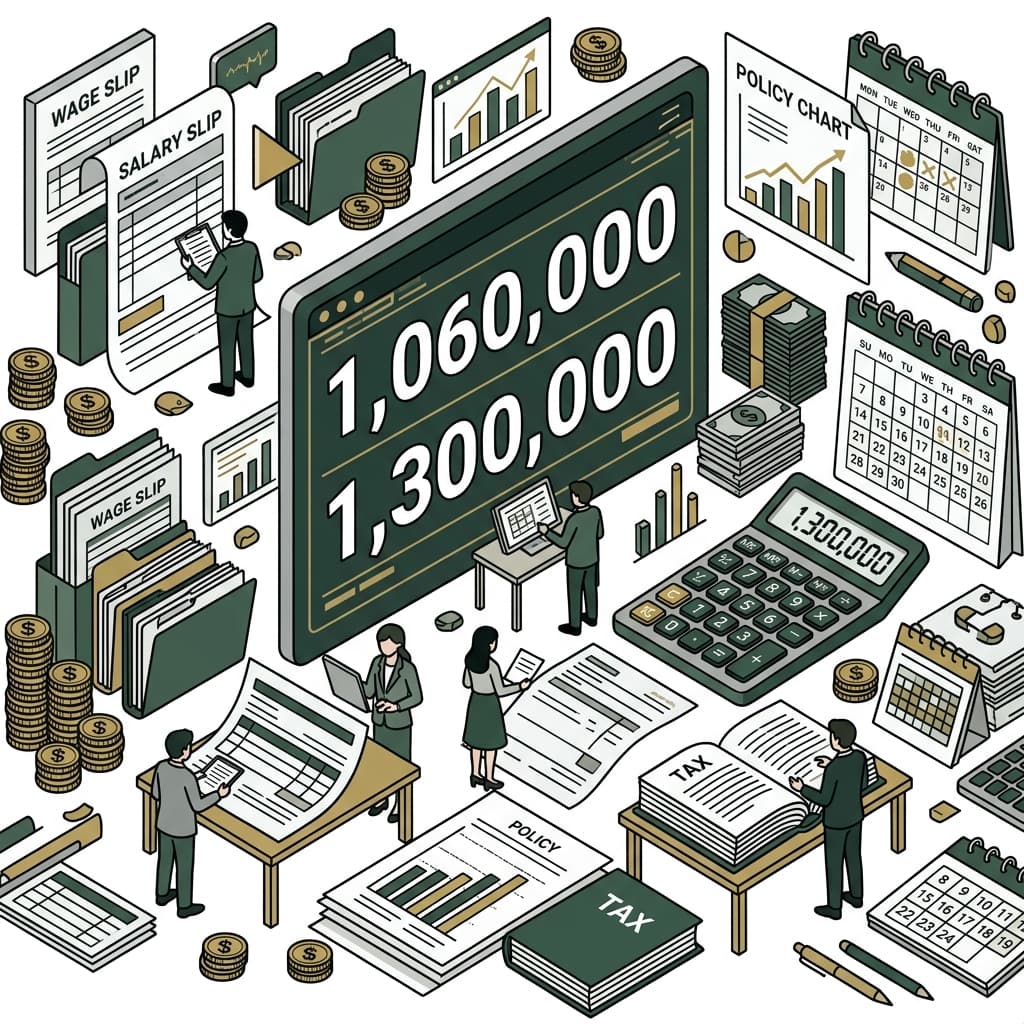
For part-time workers in Japan who want to stay within a spouse's dependent coverage, certain income thresholds — commonly called "income walls" (収入の壁) — determine whether you must pay your own social insurance premiums.
The two most significant walls are:
- ¥1.06M wall: Triggers mandatory enrollment in your employer's social insurance (health + pension)
- ¥1.3M wall: Triggers loss of dependent status under a spouse's social insurance
These walls are critical because exceeding them by just a small amount can cause take-home pay to actually decrease — a phenomenon called the "reversal effect" (逆転現象).
The ¥1.06M Wall
Who It Affects (Post-October 2024 Rules)
The October 2024 reform expanded the scope significantly:
Employees who meet ALL of the following must enroll in social insurance:
- Weekly scheduled hours: 20+ hours
- Monthly wages: ≥ ¥88,000 (~¥1.06M/year)
- Employment duration: over 2 months (or expected to be)
- Employer has 51+ employees (down from 101+ as of October 2022)
Students are generally exempt.
The Cost of Crossing This Wall
What you pay:
- Employee pension premium: ~9.15% of monthly wages (employer-employee split)
- Health insurance: ~5% of monthly wages (varies by region)
- For ¥88,000/month: approximately ¥12,000–¥15,000/month in premiums
The benefit (long-term):
- Higher pension payments in retirement (厚生年金 > 国民年金)
- Access to sick pay and maternity benefits
- Better health insurance coverage
The Reversal Trap
Earning just slightly over ¥1.06M (say ¥1.08M) triggers new premium payments that can reduce take-home pay below what you earned at ¥1.05M. The income range just above these walls is paradoxically the least efficient.
The ¥1.3M Wall
If annual income exceeds ¥1.3M, you lose dependent status under your spouse's social insurance and must enroll in:
- National Health Insurance (国民健康保険): Amount varies by municipality based on prior-year income
- National Pension (国民年金): ¥16,980/month (2024 rate) = ¥203,760/year
The additional burden of these premiums can far exceed the extra income from crossing the threshold, making this the more impactful of the two walls for many workers.
Take-home Pay CalculatorEstimate your exact take-home pay after taxes and social insurance deductions. Consumption Tax CalculatorCalculate Japanese consumption tax (10% & 8%)Other Income Walls Worth Knowing
¥1.03M Wall (Income Tax)
- Annual income above ¥1.03M generates personal income tax (basic deduction ¥480K + employment income deduction ¥550K = ¥1.03M tax-free limit)
- Actual tax burden near this threshold is modest
¥1.5M Wall (Spousal Special Deduction)
- A spouse with income below ¥1.5M qualifies the higher-earning spouse for the full ¥380,000 spousal special deduction
- The deduction phases out between ¥1.5M and ¥2.01M
- Above ¥2.01M: the spousal special deduction is lost entirely
Strategies for Managing Income Walls
Option 1: Stay Below the Threshold
Simple and common, but limits earning potential. Works if you prefer stable coverage under a spouse's plan.
Option 2: Cross the Wall and Accept Social Insurance
Long-term, social insurance enrollment builds your own pension entitlement. For younger workers especially, the long-term pension benefit often outweighs short-term take-home reduction.
Practical breakeven: Once your annual income reaches approximately ¥1.6M–¥1.7M, take-home pay typically exceeds what you earned below the wall, even after premiums.
Option 3: Aim for Full Independence
Working full-time or in a role that includes social insurance from the start simplifies tax planning and maximizes future pension benefits.
FAQ
Q: Does the ¥1.06M wall affect health insurance dependent status? A: Not directly. The ¥1.06M wall is about workplace social insurance enrollment. The ¥1.3M wall determines whether you remain on a spouse's health insurance as a dependent.
Q: What if my spouse is self-employed? A: Self-employed individuals don't have 厚生年金 (employee pension). Their spouses who earn over ¥1.3M must join 国民健康保険 and 国民年金 independently, regardless of company size.
Q: What changed with the October 2024 reform? A: The employer size threshold dropped from 101+ to 51+ employees, meaning significantly more part-time workers at medium-sized businesses became subject to the ¥1.06M wall.
Conclusion
The ¥1.06M and ¥1.3M income walls involve tradeoffs between immediate take-home pay and long-term benefits. Rather than simply trying to "stay under the wall," consider your life plan and career trajectory when deciding how to manage your income.
Take-home Pay CalculatorEstimate your exact take-home pay after taxes and social insurance deductions.Related Articles