Energy Drinks vs. Coffee: A Head-to-Head Comparison of Caffeine Content and Effects
Which one should you choose for a quick pick-me-up? Compare the caffeine levels of popular drinks like Monster, Red Bull, and brewed coffee, and understand the pros and cons of each.
When you need that "extra gear" for your brain, do you brew a cup of coffee or pop the tab on an energy drink? While both rely on caffeine as their primary engine, they differ significantly in their physiological delivery, supplementary ingredients, and "cost-performance." This article provides a head-to-head comparison to help you choose the best fuel for your situation.
1. Caffeine Content Performance Ranking
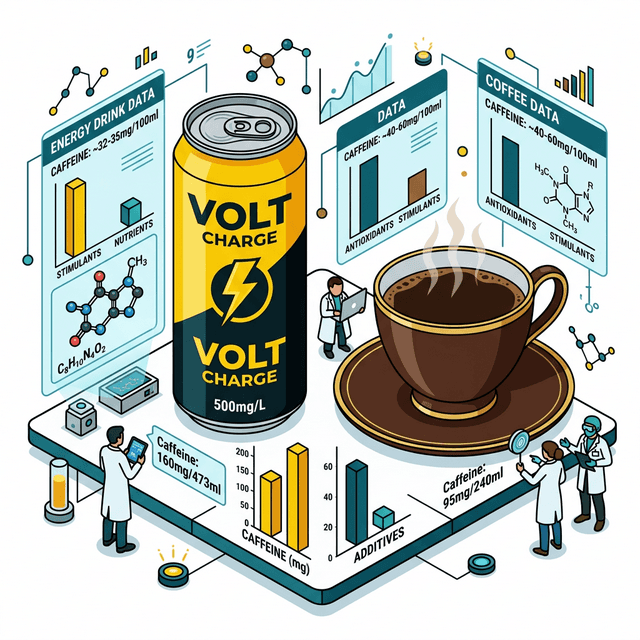
Let's look at the estimated caffeine content per serving (150ml cup or standard can).
| Drink | Caffeine Content (Approx.) | Serving Size |
|---|---|---|
| Drip Coffee | 90–100mg | Per 150ml cup |
| Monster Energy | 142mg | Per 355ml can |
| Red Bull | 80mg | Per 250ml can |
| 7-Eleven Coffee (R) | ~90mg | Hot Coffee regular size |
| Gyokuro (Green Tea) | ~120–240mg | Varies by brewing/serving (some sources cite ~160mg per 100ml) |
| Cola | ~34–46mg | Per 350ml can (varies by product) |
Surprising fact: In terms of concentration (caffeine per 100ml), drip coffee is often more potent than energy drinks. However, energy drinks are typically consumed in larger volumes in a single sitting, leading to a higher total intake.
It's also worth noting that caffeine content can vary between manufacturers and production batches. If you're unsure about your total intake for today, check your favorite brands using the tool below for precise figures.
Caffeine Intake CalculatorTrack your daily caffeine intake and learn your safe consumption limits.2. Team Coffee: Pros and Cons
Pros
- Antioxidant Power: Rich in polyphenols (specifically chlorogenic acid), linked to anti-aging and lower risk of diabetes and certain liver diseases.
- Zero Calorie Potential: Drinking it black provides caffeine without any sugar or calories.
- Affordability: Brewing at home can cost as little as a few cents per cup.
- Strategic Timing Advantage: Since caffeine peaks around 30-60 minutes after consumption, drinking coffee just before a focus-demanding task is a proven productivity hack.
Cons
- Staining: Coffee can yellow your teeth over time.
- Stomach Acidity: Drinking it on an empty stomach can stimulate acid production, potentially causing discomfort.
3. Team Energy Drink: Pros and Cons
Pros
- The "Boost" Sensation: Ingredients like B-vitamins, taurine, and sugar create a psychological "hit" of energy.
- Flavor Variety: A great option for those who find the bitterness of coffee unappealing.
- Carbonation: The fizz can provide an immediate refreshing sensation.
Cons
- Sugar Overload: A single can can contain the equivalent of 10 sugar cubes, leading to potential health risks and "sugar crashes."
- Premium Price: At $2-$3 per can, it's an expensive habit to maintain daily.
In recent years, sugar-free (zero-calorie) energy drinks have become widely available, offering a way to get caffeine without the sugar crash. However, these products rely heavily on artificial sweeteners, and those sensitive to the effects on gut health should be mindful of their intake.
4. Which Should You Choose? Scene-by-Scene Guide
Scenario A: Early Mornings or Long Work Sessions
Recommendation: Coffee
The absence of sugar spikes leads to a more stable alertness level throughout the morning. Black coffee is perfect for establishing a long-term focus rhythm.
Scenario B: Pre-Presentation or Pre-Match "Burst"
Recommendation: Energy Drink (or Sugar-Free version)
When you need an immediate mental shift into "combat mode," the combination of carbonation, sugar, and caffeine in an energy drink provides a quick psychological boost.
Scenario C: When Your Stomach is Feeling Sensitive
Recommendation: Green Tea (Hojicha or Genmaicha)
Opt for lower-caffeine teas to stay hydrated gently. However, even high-end green teas can pack a surprising punch of caffeine, so verify your choice with the tool below before assuming it's completely safe.
FAQ: Frequently Asked Questions
Q. What about those tiny "caffeine shots" (like Jolt or Gekitotsu-Daha)? A. These are "Ultra-Concentrated." A tiny 50ml bottle can contain the caffeine of 3 cups of coffee. They are effective but tax the heart and brain heavily. Do not use them multiple days in a row.
Q. Does Decaf actually do anything? A. While it has 90%+ of the caffeine removed, the ritual of drinking it can have a "placebo effect" on alertness. It’s a great for people who love the taste of coffee but want to avoid the jitters.
Q. How many "energy drinks" are actually safe in a day? A. For a healthy adult, 400mg is the safe daily limit. That translates to about 2.5 Monster cans or 5 Red Bulls. But remember, caffeine hides in soda, chocolate, and tea too!
Conclusion: Knowledge is the Ultimate Hack
Both coffee and energy drinks can be powerful allies when understood and used correctly. The key to high performance is objectivity: knowing exactly how much fuel you're putting in your tank.
Input your favorite daily drinks into the tool below. Discovering whether you're over-caffeinating or have room for more might just be the first step toward your most productive day yet.
Caffeine Intake CalculatorTrack your daily caffeine intake and learn your safe consumption limits.Try the Tools from This Article
Experience what you've learned with our free tools.
Related Articles